Showing posts with label resources. Show all posts

Friday, August 23, 2013

(Video:) Mission Possible- Behind the Curtain

I know it has been a while since I have contributed anything to this blog, but I thought it was time. I recently was fortunate enough to get an article published in Learning & Leading with Technology. Since then, I have gotten several emails and calls about how I run the back end of the program and thought it may be nice to put my thoughts to Youtube and try to answer any questions that come up.

When I did this, it was using free software and knowing very little programming language. If anyone who knows more about computer programming than me (which is probably all of you) and wants to help out on this project, I would love to find a way to better keep track of these totals.

That being said, here is a quick and dirty run through my model.


If you have any questions, or would like me to go further into any part of the model, please let me know and I will try another screen-cast. I have also meet several times on Google hangouts or Skype with interested parties.


Chris

@christopherlike

Friday, April 26, 2013

Gamification Day 2 recap

Day 2 is done and things are still going strong. I was able to stay on schedule with finishing the Electromagnetic Spectrum activity. 

I altered this activity from a lecture to a webquest to find information. Instead of me standing before them and going through the entire spectrum (which really is a pretty good lecture if I do say so myself), I gave each of them a wavelength and 20 minutes to research it. They then combined the data they found on a google doc that is shared so they can all have them as notes. They each stood before the class and presented their type of radiation. The found the radiation's speed (all the speed of light), its frequency, permeability to atmosphere, how it was created, and one use for it. 

Doing this again, I would probably focus more on the applications of each type of radiation instead of the numbers related to it. I interjected some things from my old lecture as they presented to try to get students something to remember about the radiation. 

Overall, I think it went well even though it took about 20 minutes more than my normal lecture. I can tell you that giving them only 20 minutes before they presented forced them to focus on the task at hand. A much greater majority of kids were on task on during the research part of this activity than some other activities. Keeping them focused during the presentations was a struggle so it will be interesting to see how much they absorbed. 

Today we are doing a lab using light probes and the inverse square law. This will be interesting as the equipment is intensive as well as the math component. Traditionally they are hard to motivate when the task is challenging. We shall see if they step up.

Chris
@christopherlike

Monday, April 15, 2013

Is Content Dead?

In 2002, I sat in on a colloquium at my grad school where a professor was speaking about the power of the Internet. He spoke at long length about how we are teaching students the wrong things. He argued that information should no longer be taught in our schools. Any rote information, be it the date of the signing of the Declaration of Independence, the number of Justices on the Supreme Court, or Newton's Laws of Motion, can always be looked up in a couple of seconds using the Internet. That was startling in 2002, but holds probably more validity now what I have the Internet in my pocket.

He argued that we should be teaching kids how to make better and better google searches and work on technology skills that will allow them to retrieve this information out of the ever-expanding mountain of data that is out there. He quoted statistics about how there are thousands of new papers published every day and that there was no way that anyone could keep up with the surging tide of knowledge that was flooding our world. Teach them how to get what they need when they need it, that was his philosophy. There was no need to actually know anything so long as you can have the information on hand when it was necessary.

I sat in silence in 2001 closing my eyes and hoping that his ideas would not pick up steam but fade into the black hole of educational reform agendas.

They did not.

I have read numerous blogs, several tweets, and sat through a few edchats to know that this loss of content knowledge is a real agenda on the minds of some educators. It has been over 10 years since this idea was proposed to me and my feelings on it have not changed. Let me spell out my reasoning.

Learning must occur in context. If put to the question, I would say that I am a constructivist in my educational philosophy. (If you do not know what constructivism is in education, you can always look it up. I am sure wikipedia has a great article on it.) I believe, as many educators and brain researchers do, that students learn by assimilating information to what they already know. In order to understand a concept, a person accesses some part of their brain where similar information is stored and links the new information to that.

In science, this is why identifying misconceptions is so important. If a student comes to us strongly believing in a misconception, it is imperative that that be drawn out before any new learning can take place. The experiences that we have had before coming to the classroom are just as valid to us as those we have in the learning environment.

I follow a learning cycle approach to teaching. I have chosen to stick with the simple 3-step model involving exploration, concept development, and finishing with application. This preliminary exploration phase is where I give the students a common experience for which we can draw new concepts from. In truth, I am asking them to access their preconceived schema and drawing out any misconceptions they have about the topic. This puts the learning in context with what they already have experienced, or in some cases fabricated an experience that the class can share in.

This is a missing piece in the "no rote learning" model. As an example. In 1999, I was offered a summer internship at the Mayo Clinic. I was to work in an orthopedic research lab studying cures for arthritis. Upon entering their lab, I ran across large research studies posted like movie posters on the wall. "Articular cartilage regeneration using periosteum" was not in my vocabulary. I understood two words in that title. It took me a while to gain the background knowledge, vocabulary, and skills needed to make a contribution to the lab. I was a smart guy, but this was completely out of my wheelhouse. I think over the summer, I may have done more harm than good in that place.

This is an extreme example. In all my schooling I was never introduced to these concepts and had to learn them from scratch. I was motivated to do so as I did not want to fail. I can only imagine what students would be like that had no rote knowledge to draw from.

There was a book published a while ago called Cultural Literacy- What Every American Needs to Know. In it, the authors outline basic knowledge that they believed American voters needed to know to contribute a contemporary society. They actually have a list of about 5000 words that should be in everyone's vocabulary. This goes to the other extreme, but I think there is some merit to the idea. In order for us to communicate, we need to speak the same language.

I was able to work at that orthopedic lab, as well as a particle physics research lab at the University of Iowa helping build the Compact Muon Solonoid in CERN, Switzerland due to the fact that I had a strong science background. I agree that students need skills in finding information, and that not everything can be taught in our schools, but a fundamental understanding of how the world works in necessary. Students need background information in order to learn new things.

Please comment and join in on the conversation. Where are you on the "content" spectrum?

Chris Like
@christopherlike

Monday, April 8, 2013

The Science Teacher's Reading List

I thought I might give y'all some insight into what I have been reading that have changed my teaching. I have put together a short list here of some of the things that keep me busy when I am not putting time into writing this, planning that, grading those, or presenting whatever. Most of them are classics that are such a staple in our society, that you can draw examples from them and many of your students have heard of the book.

NON FICTION
_______________________________________________________________________________
1. A Brief History of Time- Stephen Hawking

Even though it celebrated it's 10th anniversary about 15 years ago, this piece of literature is a must read for science teachers. Hawking writes this for the layman (under 200 pages), taking complicated mathematical astrophysics and simplifies so my mom can understand it. Hell, he only uses one number in the whole book (the speed of light). I have my students in my Astronomy II class read this as supplemental material for particle physics, Einstein's Theories of Relativity, and Black Holes. Much of this book is still applicable with new physics, but you may want to look up some new physics after chapter 8.

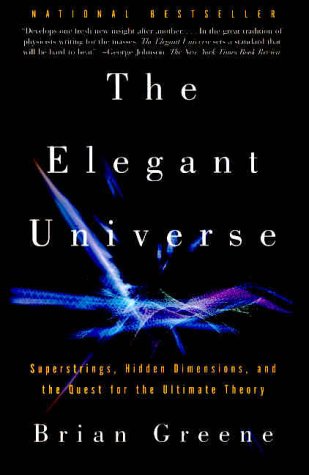
2. The Elegant Universe- Brian Greene
When you finish with Hawking, you may want to expand your knowledge to more current theories on string theory, M theory, or quantum tunneling. No one is better at this than Brian Greene. He is a string theorist, but try to not hold that against him. The beginning half of this book is wonderful. He uses real examples to teach us about dimensions, the speed of light and Einstein. I am not sure how much of the string theory stuff I buy into, but it is always good to see all of what is out there. He made a PBS special on this that you can watch online that is also great. I believe you can even use clips from it in your class. 

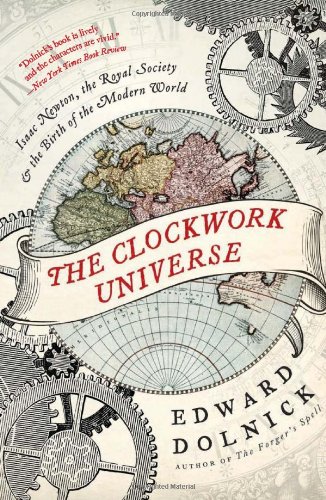
3. The Clockwork Universe- Edward Dolick

This is essentially a biography of Isaac Newton. I am a huge believer in the importance of the history of science. Scientific developments are subject to political pressure, society's whims, and funding. It was no different in the time of Newton, and it is no different now. I think you should definitely read a biography on Newton, Galileo, and Kepler if you are going to teach physics or astronomy. 

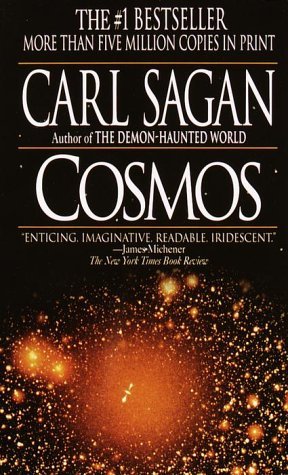
4. Cosmos- Carl Sagan
No one is better than Carl Sagan. He is somewhat of an icon in my astronomy classes. Even though this Cosmos series was shot in the 80's and has very poor effects as seen today, my students love it! Carl has a personality and a flare for drama that is unmatched in today's discovery channel specials. The series is on Netflix and is totally worth a look. This book is a must read for astronomy teachers. 

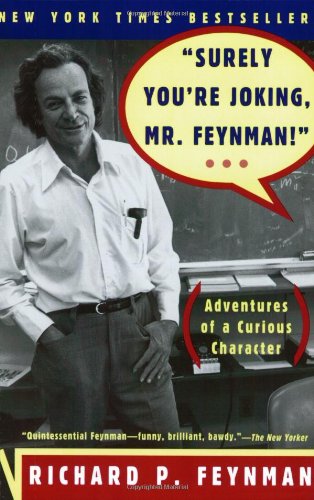
5. Surely You are Joking Mr. Feynman- Richard Feynman
Any book by Feynman is a gem. His books were ones that physics teachers anticipated like a 9th grade girl waited for a Twilight movie. He is funny, light, and brilliant. After you get a feel for Feynman with this one, check out his Lectures. 


FICTION
______________________________________________________________

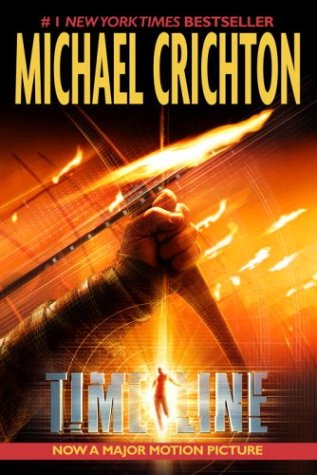
1. Timeline- Michael Crichton
Anything by Mr. Crichton is great, but this one I really enjoyed. I am a big history buff as well. I heard at one time that the way in which he describes going back in time using quantum foam and such is theoretically possible, but you know how non-fiction is. This may be on my top 10 book list and has some interesting science in it. The movie is okay, but nothing compared to the book.

2. The Sum of All Fears- Tom Clancy
Tom Clancy writes terrorist handbooks. All of his books are amazing in their detailed descriptions of how the military functions. He describes the engineering behind a lot of military applications of what we talk about in our classes. His best book may be Rainbow Six, but this one describes how to create a nuclear bomb in intricate detail. Coming from the guy that crashed airplanes into the Capital Building a decade before Bin Laden, this guy knows the mind of the military and their enemies. I would suggest starting with Patriot Games and read the all. Ignore the movies. 

3. Science Fiction- Various Authors

I am going to cap this list off by encouraging you to read some science fiction. Although the science may be bad in these, the imagination that goes into the uses of simple scientific principles is noteworthy. I read these as they are classics that any fan of the genre are must reads. Most of these are a series of books that if you like the first one, you wont want to stop. 
  • Ender's Game- Orson Scott Card
  • Foudnation and I, Robot- Isaac Asimov
  • Battlefield Earth- L Ron Hubbard


Finally, as I have your attention, the best series I have ever read has nothing to do with science, but is amazing anyway. If you have not read George RR Martin's Song of Fire and Ice series, you are missing out. It begins with A Game of Thrones and only gets better after that. HBO has picked it up and done a great job adapting it to screen. 

Please let me know what you are reading as I am always looking for something new. 

Chris
@christopherlike


Friday, March 1, 2013

A Teacher's Tech Wishlist

Here is a short list of things that I wish I had in technology that either are not invented yet, not available to me due to price or IT restrictions, or that I simply do not know about yet. If some of these are available, please let me know where I can get them.

  1. An iPad/website testing app that will allow for the following:
    1. Students can not close the app or move to another screen during the test. (I would like exceptions to teacher-allowed apps or websites. I am thinking of a calculator, periodic table, or designated web address)
    2. Multiple questions can be linked to a single passage. Similar to the ACT or any standardized test, you give the students a passage to read, or graph to interpret, and then ask several questions about it. 
    3. The app links with my school's grading program so that the grades can automatically be placed into my gradebook. We have purchased Naiku, which is supposed to do this, but my district will not release our student data for their database due to confidentiality issues
  2. I would like google spreadsheets to be better on mobile devices. They have come a long way but need to be able to graph and do some data analysis like the slope of lines and such. I have recently gotten Appster for google docs and it looks to help with this, but it has been buggy for me. 
  3. A free online textbook for my classes. With the Internet, information is free! Why am I paying so much money for your take on Kepler's Laws? Be careful textbook companies, if this is not done soon, I am going to write my own!!
  4. It would be really nice if java worked on apple products. So many animations in the sciences are made as java applets. With the iPad, we are starting from scratch. 
  5. A student monitoring program would be great for the iPad. With the desktops in my room, I could run a program called Vision that would show me all the desktops in my room in real time. I was able to take over a student's desktop remotely. Can we get something like this for our 1:1 mobile devices? It may cut down on the games being played in class that are eating up our bandwidth. 
I am sure there are more but on a Friday morning, this is all I can come up with. If I think of something else that I would like, I will post it in the comments. If you read this and can help me or have something on your wishlist, please post a comment. 

Chris
@christopherlike

Thursday, February 28, 2013

Concentrating on Concentration

If you have been reading this blog, you probably have picked up on the fact that I am not one for gimmicks, new buzzwords, or educationese that has little basis in research. That being said, I want to talk about something I came across in college that I truly believe changed my perspective on being a student and life in general. Sounds like a big deal. Here is how it works.

David Ellis wrote a book called "Becoming a Master Student." I was introduced to Mr. Ellis's work when hired as a mentor at UNI in the student services department. His ability to pin a catchphrase to life's challenges is so cheesy that it is memorable. The surprising thing to me is that it works!

Be Here Now!

 The crown jewel of catch-phrases, this one has stuck with me for the 15 years it has been since college. Here is the basis of it. Have you ever met someone, they gave you their name, you shook hands, gave them your name but then had no idea what their name was? I do it all the time! Mr. Ellis contends, and I agree, that you weren't there at the moment they said their name. You were thinking about your name.

This deals with that little voice in your head, that little guy or gal who is constantly talking to you. If you are quiet, you can hear it. Try it... Yours may have said "this is dumb," or "I'm hungry", or "What little voice?" THAT'S THE VOICE! It is annoyingly off task most of the time. Ellis quotes that some researchers say that you can not keep that voice on task without consciously doing it for more than three seconds. It takes practice corralling that little voice.

Pay attention to your attention!

What is better than that catchphrase? You need to know that that voice is going to be off task and you need to put it back on track. Pulling your attention back to attention takes practice. Athletes do this. When Tiger Woods stands over a put, his focus is solely on what he is doing. He is "in the zone". This is a hard thing to do. While walking down the fairway, golfers learn to let their mind relax, think about something else, and let their little voice wander. Then they bring it back in focus when they get to the ball.

Do what you are doing while you are doing it!

This Ellis guy is a master wordsmith if there ever was one! Bring your attention to attention (God, I am doing it now) when you need it. For students you can talk to them about daydreaming. It is okay to give yourself a bit of a rest while listening to a lecture, but do it at an appropriate time. Know the consequences of taking a few seconds or minutes to tune out. Can you anticipate where the lecture is going? Is this something that is essential to understanding future topics? What will it mean if I do give my concentration a break?

This paying attention to your attention (it's hard to stop when you get going) has amazing results. By going over these simple principles, giving students an appreciation for how their brain works, can really improve their school experience. For teachers, this will make you a better listener, which is great for the classroom, relationships, and just about every aspect of life. Try it, remember the catch-phrases. If you want more on this, get Dave Ellis's book and dive deep. (I am in no way affiliated with Mr. Ellis and neither he nor anyone in his employ are paying me to say these things:)

As always, your comments are encouraged.

Chris
@christopherlike

Wednesday, February 20, 2013

Mission Possible: Playing Games with Professional Development

A few posts ago, I talked a bit about Gamification in education. I then went on to discuss an idea I had to apply this to my classroom with Galaxy Fleet. After presenting at last weekend's Iowa Edcamp, I am inclined to give you some specifics of the Professional Development model I created that uses these principles.

Mission Possible is our district's model for professional development with regards to technology in our 1:1. In creating this process, I was looking for something that was highly engaging (or as engaging as any PD can me) as well as individualized and fun. Teachers were coming into our 1:1 initiative at many levels. We had those who could not wait to get their hands on their iPads, and those that never planned to take them out of the box. I needed a system that would challenge the high flyers while bringing those indifferent to the technology into the fold.

I see learning technology to be three fold. First there has to be a time where you simply get comfortable using the device or programs. In the game, this is where teachers begin. Level 1 teachers are given the title "Noob", a distinction that they no doubt want to shed as soon as humanly possible. Upon reaching level 3 in the game, they are considered "Users". I see users as teachers who are not afraid to turn on a computer or device and use it, but may not know exactly what to do with it. They want to play with different apps, find already developed programs to use, and master them. User levels (3-6) are where most of our teachers currently sit after about a year into the program. Upon reaching level 7, we start referring to teachers as "Tech Geeks". These people are comfortable finding apps and using them. They don't need any more in-service on what is out there or how to find it. Their levels shift to how they are going to implement these strategies into their classes. They collaborate with other Tech Geeks to infuse the technology or they share their expertise with others by leading sessions on in-service days.

Those are the three Tiers of the game. The mechanics follow real basic gamification principles. To gain a level, teachers do "Missions." Missions are set to take about 15 minutes each. A level 1 mission earns the teacher 1 "Paw Point" (we are the bulldogs). Once they reach 10 paw points, they lose the noob status and become a level 2 novice, on their way to being a User. Level 2 missions are worth 2 paw points each, level 3 worth 3 and so on. Teachers are not allowed to do missions above their level, but can "farm" lower level missions for small amounts of paw points.

Here is the website for the Game. 

You will not be able to see the leaderboard, which we do post so everyone knows where they stand. At the onset of the game I made a couple of things very clear with both the teachers and the administration. First, this is NON-EVALUATIVE. At no time will an administrator come to them and ask why they are only 5th level. I am a firm believer you get from Professional Development what you put into it. The only requirement that teachers have in the game is that whenever they are given time to do missions, that they put forth their best effort. Second, the game is really on the honor system. No one is going to be standing over their shoulder watching them do missions. Again, you get out what you put in.

I can tell you that this posting of the leaderboard is a key to the game aspect of it. It engages teachers' competitive nature just like Call of Duty does with my eldest son. The guy at the top will not let others ahead of him, even though they try. Some don't want to be at the top, but they always want to be ahead of that person right above them. The level of interest has dwarfed my expectations.

As teachers move through the game they can pick up other titles along the way for completing sets or "chains" of missions. If a teacher does a set of 5 missions on twitter, we give them the title "Twenius" on the leaderboard. This allows others to see who are experts on programs they might be interested in. They can seek them out instead of the tech department.

I encourage you to develop your own game based on this model. I am not selling the idea, I am giving it. Use it, make it yours. In doing so, I can give some advice. Keep it light; keep it fun. Name the missions with cute names like "Mickey Mouse is Pissed" for copy write, or "How do I put my face on Jennifer Lopez's body" for paint programs. Put effort into selling it to admin before the teachers. Time is always the biggest issue. Some teachers will do missions at night while sitting in bed, but most will only have time to do them when given it by admin. Be sure you have their support before selling it to the teachers. Celebrate successes. We always tweet out when someone raises a level. We have given prizes like earbuds to everyone who hits 5th level, or stylus's to the first 5 who hit 7th level.

Crowdsource the making of the missions to your teachers. Upon reaching level 7, teachers are beginning to help in making the actual missions, or ratifying earlier missions to make them better. I do not have the time or expertise to make missions for apps in all the different disciplines in my school. I let others do the work for me. I can post more on this later, but it is a big part of what makes Mission Possible actually possible.

As for the back end to this, I did it in Google forms and spreadsheets. Why? They were free and I kind of knew how to use them. If a programmer reads this and wants to write a database that keeps better track of these things, please do and share it with me. If you are interested in seeing the data side of this, please let me know and I can post something on that later.

That is an overall look at the game. I have presented this at a couple of conferences and can tell you that the idea is spreading like the clap at Woodstock. Grant Wood AEA is trying to develop something, I have had talks with the Des Moines School District, as well as Dubuque AEA and several smaller districts.

Let me know if there is any way I can help in these or other endeavors with this idea.

Chris
@christopherlike

Friday, February 1, 2013

When I was a kid we had this thing called paper...

Yesterday I talked about the death of textbook companies. Today I want to open a discussion about the death of the textbook, at least in the traditional sense. It may see odd that in my previous post I tried to rally some of you to help me create a textbook and today I am talking about killing it. Let me clarify. I am going away from the word "textbook". If it were me I would strike it from our language (along with 'hashtag'... its a number sign!).

I am suggesting that we replace the T-word with "resources". This term has a much broader scope for what is possible with today's technology. We have text, video, simulations, interactive homework, online tutors and a multitude of other resources that students can use to get information. Why are we tying their hands by giving them this crutch. There is no textbook for life. In the real world when I want to find information on how to fix a fuse on my dryer I  watch Bob Villa do it on Youtube or look up the manual on the Whirlpool website (Lord knows I will never find the paper copy).

Here is what I have been moving towards. It is an experiment right now but something that seems to be working. I have done preliminary work in all my classes but have focused mainly on my astronomy class. I began by defining the "Essential Questions" that I believe they should be able to answer after the unit I am teaching. I then went online to find resources that will help students investigate the answers. I put links to these resources online for students to peruse. I am not assigning a particular chapter to read, or a specific movie to watch, I am assigning a question to investigate. They can choose what method they learn best with.

I do of course lecture on these things and we do all the stuff in class we normally do with labs, homework, formative quizzes and such. This is my alternative to their $90 textbook that they never bring to class.

Here is a link to my Astronomy Site and the resources I have found for them. It is not complete but I really am just beginning to flirt with this idea. On my schedule I assign a section (1.1 or 1.2) that they can work with at home.

I am not sure if this is the best method, but so far I have gotten good reviews from kids. There are great resources out there that we all should be using. It is my hope that in future units I am able to give them less and less "resources" with the expectation that they find the material themselves. I may someday pose the question and they will have to find the video or website that explains it. That is what I do when I have a problem to solve.

As always let me know what you think. Please don't be shy.

Chris

@christopherlike